2022年12月4日星期日

How To Connect Non-Threaded Galvanized Pipes?

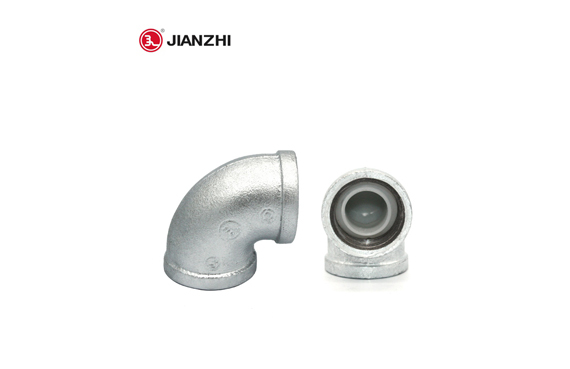
Connecting unthreaded galvanized pipe together using couplings that form sealed joints. It is important to know the type of coupling used for galvanized non threaded pipe fittings and the installation procedure so that the pipe does not leak. Depending on the type of zinc and steel heating process, the galvanized pipe has a rough or smooth zinc coating. Most conventional galvanized pipe is rough, which can be a concern when trying to securely seal two pipes. Next, the galvanized pipe fittings supplier will share the following content with you.

Steps: Determine the diameter of the pipe, determine the smoothness of the pipe, check the orientation of the pipe, clean the galvanized pipe, insert the unthreaded galvanized pipe and tighten the bolts. More details read on!
Step 1

Use a tape measure to measure the outside diameter of each pipe. If the diameters match, choose a standard coupling. If the diameters are different, choose a stepped coupling.


Step 2

Look at the galvanized surface of the pipe to determine if the coating is rough or smooth. If the galvanized coating looks and feels textured, select a coupling manufactured to accommodate a rough surface pipe. Rough surface" couplings are required because they have tolerances for all types of uneven pipe surfaces, such as concrete and cast iron piping.

galvanized non threaded pipe fittings
Step 3

Align the carpenter's level with the end of the unthreaded pipe to check that the end is square. If the ends are not flush, cut the ends with a hacksaw or chainsaw to make each pipe level. Use a metal sander to remove the rough edges of the tube ends.


Step 4

Wipe the pipe with a cloth and water-based degreaser to remove dirt and stains from the joint area. Place the ends of the tubes together. Center the joint on the pipe fitting and mark a pencil line on each pipe at each end of the fitting.


Step 5

Insert one end of the unthreaded galvanized pipe into the fitting. Align the coupling end with the drawn line on the pipe. Insert the second pipe into the coupling and place the coupling centered between the two drawn lines.


Step 6

Tighten the fastening bolts until the coupling just holds the galvanized pipe in place. Use the torque wrench set at the coupling mark torque requirement to tighten the bolts evenly until the wrench clicks.


After learning how to connect threadless galvanized pipes, the galvanized pipe fittings manufacturer will explain how to clean galvanized steel pipes.

galvanized non threaded pipe fittings

How to clean galvanized steel pipes?

Galvanized steel pipes are used typically in plumbing applications where the metal is exposed constantly to moisture. To galvanize a steel pipe is to treat it with a special zinc-oxide coating to prevent oxidation and limit the damage to the pipe created by other corrosive elements. Cleaning galvanized pipe will extend the life of the zinc-oxide coating.
Step 1

Combine 1-gallon hot water, 1/4 cup dishwashing detergent, and 1 cup vinegar in a bucket.


Step 2

Dip the soft brush into the soap solution and scrub the pipe using small circular swirls.


Step 3

Rinse pipes with warm water and dry them.


Step 4

Apply metal polish using a lint-free rag in small circular rotations.


Step 5

Allow the metal polish to dry, then wipe clean.


Shop great prices on Galvanized Pipe Fittings available in various shapes. Here find fitting dimensions, specifications & all fittings sizes, contact us now! If you want to know about the wholesale galvanized pipe fittings price, welcome to contact us.

Some of the information above is from the JIANZHI news page.

2022年11月21日星期一

What are the advantages of Jianzhi Group's malleable products?


company advantage


1.     Good quality


a. The heaviest quality

Compared with the national standard products, Jianzhi products are the heaviest in quality, obviously heavier than the national standard products of the same specification from any domestic manufacturer.


b. The most beautiful appearance

Due to years of experience in molding and casting and leading technical advantages, the smoothness of the appearance of Jianzhi products is the best in China, and the galvanized surface is smooth and flat. Due to the fine and dense molding sand, there are no large sunken sand hole residue marks on the surface.


c. The most precise thread

As mentioned in the threading process above, the pipe thread standard for construction is the most stringent in the industry, and the length and precision of the pipe thread strictly follow the national standard. The installation is simple and trouble-free, and the sealing performance is good.


d. Pay the highest

Due to our excellent quality control, we proposed the only highest compensation standard in the same industry in China, 1,618 yuan for a gray part, 500 yuan for a through-hole part, and 200 yuan for a substandard product.


2.The malleable pipe fittings industry has the most complete products Product categories, the most complete specificationsIn the field of malleable steel pipe fittings, Jianzhi has the most complete product varieties and specifications. At the same time, we have good cooperative relations with many brother factories that produce stainless steel pipe to wire and valves, which can fully meet the needs of customers for one-stop procurement.


3. Sufficient production capacity and stable supply

The production capacity of Jianzhi Group has reached an annual production capacity of 400,000 tons, and it is the only domestic enterprise that can still produce at full capacity without being affected by the national environmental protection policy. Therefore, the products of Jianzhi Group can provide customers with a guaranteed production cycle and delivery cycle, so that customers can avoid the pain of shortage.

2022年9月26日星期一

What do you know about 45 degree galvanized pipe fittings?

Do you really know about galvanised 45 degree elbows? Here are four points to explain: the definition, the type, the connection and how to distinguish a 90 degree elbow from a 45 degree elbow.
45 degree galvanized pipe fittings


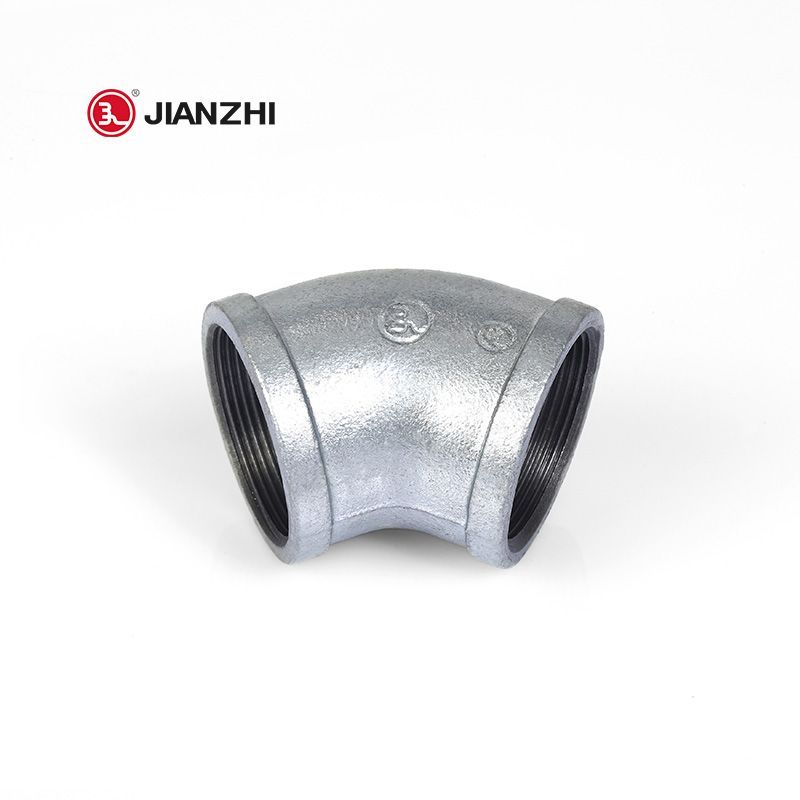
Galvanised 45 degree elbows change the direction of flow and can transition from external to internal threads. With the help of a threaded connection, galvanised cast iron 45 degree elbows allow you to install any configuration of pipe, depending on the task.

Types of 45 degree elbows

45 degree long radius elbows

Pipe elbows are installed between two pipes so that the direction of the fluid can be changed to 45 degrees. Compared to a 90 degree elbow, a 45 degree elbow creates less friction and lower pressure.

45 degree short radius elbow

45 degree SR elbows are usually attached to copper, plastic, steel, cast iron and lead, but can also be attached to stainless steel and rubber clamps. They are used in many applications such as chemical, food, water supply facilities, electronics industry, chemical piping, horticulture, agricultural production, solar equipment piping, air conditioning piping and many other applications.

What is a 45 degree elbow?

A 45 degree elbow with a female National Pipe Taper (NPT) for changing the direction of flow between two pipes. Our high quality standard 150 lb. threaded fittings are manufactured to the highest standards. All malleable iron fittings are monitored by quality control personnel for strict compliance with applicable standards and specifications. These malleable iron fittings are ideally suited for applications involving potentially corrosive chemicals or liquids. In addition to being resistant to corrosion, malleable iron fittings are also resistant to contamination, making them useful to many professionals.

45 degree elbows are usually manufactured as LR (long radius) elbows. Only in very small applications, such as very tight places, do people use short radius elbows. As few factories produce these short radius 45 degree elbows, engineers or workers will cut a 90 degree elbow into two 45 degree elbows.


How are 45 degree elbows connected?

The connections to the pipe are: direct welding (the most common method) flange connections, hot fusion connections, electrofusion connections, threaded connections and socket connections. According to the production process can be divided into: welding elbow, stamping elbow, pushing elbow, casting elbow, etc..


How to distinguish between 90-degree elbow and 45-degree elbow

1, the naked eye: 90 degree elbow two hole extension line vertical, 45 degree elbow two hole extension line intersected into an acute angle.

2, look at the catch: after the catch both sides of the 90 degree elbow to form a right angle, after the catch both sides of the 45 degree elbo

2022年7月25日星期一

What is black iron pipe fittings and what are the uses of black iron pipe fittings?

Pipe fittings are components used to join pipe sections together with other fluid control products like valves and pumps to create pipelines. The common connotation for the term fittings is associated with the ones used for metal and plastic pipes which carry fluids. There are also other forms of pipe fittings that can be used to connect pipes for handrails and other architectural elements, where providing a leak-proof connection is not a requirement. Pipe fittings may be welded or threaded, mechanically joined, or chemically adhered, to name the most common mechanisms, depending on the material of the pipe.There are many types of pipe fittings, for example, black cast iron pipe fittings among them.As a Canadian wholesaler of black cast iron pipe fittings, this article introduces the definition of black cast iron pipe fittings and the uses of black pipe fittings, mainly from two aspects.
black iron pipe fittings wholesale canada


What are Black Iron Pipe Fittings?

Black pipe fittings are a kind of malleable iron pipe fittings or grooved pipe fittings,are made from corrosion-resistant ungalvanized steel with a scaly, black-colored iron oxide coating. Since there is no surface treatment, they are called black pipe fittings. Correspondingly, it is hot-dip galvanized pipe fittings, that is, galvanizing the surface of black pipe fittings to form a zinc layer of a certain thickness.

What are Black Iron Pipe Fittings used for?

Pipes and fittings with black iron are connected with black pipe fittings (black malleable iron fittings). The black iron pipe system transports natural gas to residential properties.

Due to its seamless construction, black steel pipe is better suited for gas transportation and fire sprinkler systems

On the other hand, black steel pipe is not suitable for water transportation. The black steel pipes tend to corrode in water and the minerals will dissolve in the water, clogging the line.

Our wholesale black iron pipe fittings for Canada are made from durable materials that help them withstand high temperatures and pressures. This makes black iron pipe fittings and supplies the preferred choice for transporting water, oil or gas. For your convenience, we've made our black iron pipe fittings for Canada inventory easy to search by filling out the search box for black iron pipe fittings. Select a style of black iron pipe fittings, whether elbows, tees, couplings, flange fittings or bushings, and you will be presented with options for standards and sizes. If you want to buy black iron pipe fittings in bulk, we offer wholesale discounts for Canada on large orders of black iron pipe fittings. Again, if you have any questions while browsing the site, or need answers to your questions, please feel free to contact our friendly staff and a member of the JIANZHI team can point you in the right direction. Buy wholesale from JIANZHI to get wholesale prices on cheap black iron pipe fittings for Canada.
black iron pipe fittings wholesale canada


2022年6月24日星期五

Why choose cast iron fittings?

 Cast iron is both reliable and durable, making it the best choice for use in commercial buildings. Cast Iron Pipe Fittings


Cast iron pipe and fittings have been the backbone of drainage, drainage and ventilation piping systems around the world for centuries.


While plastic meets minimum building standards in many cases, what meets code and what represents the best solution for high-performance commercial construction are two very different issues.


Many times, the cost advantages of plastics over cast iron are not what they appear to be. Before allowing a job to be converted to PVC or ABS, consider five areas that may add cost and complexity.


Fireproof construction

Underground installations

Above-ground installations

Sound attenuation

Importance of manufacturing standards


Cast Iron Types


Cast iron soil pipe and fittings fall into two main types - hub and socket and hubless. Hubless pipes and fittings are also referred to as hubless in the plumbing industry.


Hubless cast iron soil pipe and fittings are manufactured without hubs in accordance with CISPI 301. The method of connecting pipe and fittings uses a metal shielded hubless coupling manufactured in accordance with CISPI 310 that expands and contracts on the flat end of the pipe and fitting and is twisted to seal the joint.


Hubless cast iron soil pipe and fittings are manufactured in one category only, with wall thicknesses varying by size. Many different fitting configurations are available, with pipe and fitting sizes ranging from 1 1/2" to 15". Metal shielded couplings for connecting hubless pipes and fittings are also available in these size ranges from member companies of the Cast Iron Soil Pipe Institute.


Hub and Socket Pipes and fittings have a socket (flat end) into which the pipe or fitting is inserted for the hub. The joints are sealed with thermoset elastomeric gaskets or lead and oak.


Hub and Socket Tubes and Fittings are available in two grades or thicknesses, Service (SV) and Extra Heavy Duty (XH). Additional wall thickness is added to the outside diameter of the Extra Heavy Duty (XH), so Extra Heavy Duty (XH) and Service (SV) are not easily interchangeable.

cast iron 90 degree elbow


Hub and socket tubes and fittings are manufactured in accordance with ASTM A-74 and are available in sizes 2"-15". Thermoset elastomeric gaskets, lubricants and assembly tools are available from member companies of the Cast Iron Soil Pipe Institute
Uses Of Cast Iron Soil Pipe

Cast iron soil pipe and fittings are used primarily in building construction for sanitary and storm drain, waste, and vent piping applications. The product is installed in residential construction, hospitals, schools, and commercial and industrial structures. For this reason, the pattern of cast iron soil pipe shipments and sales is directly related to the pattern of building activity. 

In buildings, the principal assembly of this piping is installed within the partitions and serves the tub, lavatory, and water closet fixtures. The main line in this assembly is the cast iron soil stack, which runs vertically from the building drain up through the structure and through the roof. Waste lines are connected to this main soil stack, and vent lines may also be tied in at a point above the highest fixture. In some installations vent lines are connected to a separate vent stack, which acts as the main source of air to and from the roof. 

The building or house drain, the lowest horizontal piping in the drainage system, receives the discharge from the soil, waste, and drainage pipes from within the building and conveys the discharge to the building sewer. The building or house sewer, in turn, conveys the discharge outside of the structure, to the point prescribed by the local plumbing code for joining of the city sewer, septic tank or other means of disposal. 

Another use for cast iron soil pipe and fittings in building construction is for storm drainage from roofs, yards, areaways and courts. It is used for collecting subsoil drains, which are placed around the foundation for connection into a storm drainage system, or into a sump. It is also used for roof leaders, particularly when these are placed within the building, pipe space, or other area. Extensive use is made of soil pipe for storm drainage on high-rise buildings where large setbacks accumulate substantial amounts of rainwater and snow. At present, cast iron soil pipe is used in high rise building construction for drain, waste, vent, and sewer purposes without concern for building height and is, in fact, the preferred material. There are large numbers of uses for cast iron soil pipe other than in building construction. 


Selecting Piping and Piping Materials

 Many factors are involved in selecting piping and piping materials. Designers should approach these decisions and determine the advantages and disadvantages of various piping materials and connection methods.


Today we will discuss together on the following topics.

Understand the advantages and disadvantages of various piping materials.

Become familiar with some of the issues associated with material compatibility.

Understand corrosion issues in circulating and domestic piping systems.


The piping material chosen depends on the application and water quality. For example, heating systems typically use steel pipe because of its low cost, high strength and heat resistance, while pure water systems may use pure polypropylene (PP) or polyvinylidene fluoride (PVDF) pipe.

Basic material characteristics


Steel is strong, rigid and has a low coefficient of thermal expansion. It is also heavy (may require multiple workers to transport) and prone to corrosion. It is sometimes referred to as carbon steel or black steel to distinguish it from stainless steel and galvanized steel. By definition, all steel contains carbon.


Steel is often used in closed loop systems because it is inexpensive, especially compared to other materials used in high pressure systems, and because corrosion is relatively easy to control in these systems. It is also a good choice for steam and steam condensing systems because it can handle high temperatures and pressures well, and corrosion in steam piping is usually not a problem. However, corrosion is a problem in steam condensate piping, and many engineers specify 80-gauge steel simply because the corrosion time is about twice that of 40-gauge pipe.


Condensate pipes can last the life of the building if amines (usually cyclohexylamine, morpholine or diethyl ethanolamine (DEAE)) are properly added to neutralize the pH of the condensate pipe. Some building owners do not want these chemicals in the steam for humidification because of health concerns; however, not using these amines may require replacing stainless steel (SS) piping or adding a separate "clean steam" system for humidification and medical device sterilization.


Rigidity is important because it determines the distance between hangers. Steel tubing is available in 21-foot lengths, and hanger spacing can be very wide for large diameter tubing. However, more flexible materials may require hangers closer to 4-foot centers or even continuous hangers. For more information on hangers and hanger spacing, refer to ANSI/MSS SP-58: Pipe Hangers and Supports - Materials, Design, Fabrication, Selection, Application and Installation.


The low coefficient of thermal expansion minimizes the need for expansion loops and expansion joints. However, the high stiffness of steel means that although it expands less, it exerts a very high force on the anchor.


Galvanized steel pipe is a steel pipe immersed in a pool of zinc (see Figure 1). Galvanizing has two methods of reducing corrosion.


It is applied to the surface like a paint and in most cases it forms a very adherent oxide layer like aluminum and stainless steel.

It provides a sacrificial anode (zinc) to accept corrosion instead of steel corrosion.

Galvanized steel pipe has all the advantages of steel pipe and offers higher corrosion resistance in most environments, although at a slightly higher cost. Galvanizing works almost perfectly in applications where it is regularly wetted and dried (e.g., road signs and guardrails). It can fail in environments with high sodium content (e.g., very hard softened water at first) because the sodium causes the adhering oxide film to peel off and react like steel pipe where the oxide peels off. If galvanized pipe is being welded, the welder needs to be careful to grind down to raw steel. Repairing the galvanizing inside the pipe is difficult or impossible. If continuous galvanizing is required internally, consider a mechanical coupling. (More information is available through the American Galvanizing Association.)


Copper pipe is typically used for hydronic and domestic applications, especially 2 in. and smaller pipe sizes. However, some contractors recommend copper in lieu of galvanized steel domestic plumbing in sizes up to 6 in. sizes, especially in the Midwest. Copper is an expensive material, but has the advantage of being lighter in weight than steel and may require fewer employees to install, depending on weight and union restrictions. In addition, copper is typically more expensive and more resistant to corrosion than steel or galvanized steel.


In the HVAC industry, most copper is L-type (medium thickness) hard (tempered) copper, although underground soft (annealed) copper is usually K-type (thick). Drainage, wastewater and discharge (DWV) piping is thinner (Type M).


Stainless steel is widely considered to be resistant to all corrosion. This is true in many cases, but not all. Anaerobic and chloride corrosion can affect SS. the most common alloy is 304 SS, which adds 18% chromium and 8% nickel to the steel. 304L reduces the carbon content to minimize the tendency of SS to corrode at the weld seam. SS with the L designation is recommended for all SS that will be welded and may have corrosion problems, such as fume exhaust and some piping systems. 316 and 316L add molybdenum to reduce susceptibility to chlorides.
Over the past decade, we have seen thinner stainless steels proposed as an alternative to galvanized steel pipe and large diameter copper pipe, primarily for domestic drinking water piping. If not done properly, a problem can arise (see "Mixing materials can be a problem").


SS requires some oxygen to form an adherent oxide layer, just like aluminum wheels. This is not usually a problem in recirculating heating/cooling systems or domestic water systems, but oxygen levels in large chilled water storage systems can become low enough to create problems with microbially influenced corrosion (called MIC).


There are many grades of SS. In general, 300 series alloys are the most corrosion resistant and non-magnetic. 400 series are harder, more wear resistant, can withstand higher temperatures and are magnetic. 200 series alloys are used in sinks and in applications with less acceptable corrosion resistance.


Cast Iron (CI) is used primarily in sewer and storm water systems. It has very good corrosion resistance in these applications. The disadvantage is that the most common joints are not restrained. Most cast iron joints are either push-in or hubless. Push-in joints work very well underground, where soil pressure helps prevent the pipe from moving. Above ground, however, there is a risk that the pipe could separate if a blockage occurs and the pressure becomes too high. Galvanized steel, mainly used in storm systems with mechanical joints or plastic bonded pipes, can be specified when pressures may cause a flood risk.


Ductile Iron (DI) is similar to cast iron, except that it has a lower carbon content and has annealed and/or additives, such as magnesium, to form a different (spherical) matrix. This makes it stronger and more ductile than cast iron. Its corrosion resistance is very similar to that of cast iron.DI is commonly used in municipal water pipes. For storm sewers or sanitary sewers, a section of DI pipe can be specified to pass under the foundation so that if the structure settles, the pipe will bend without breaking.


Duriron is almost off the market, but it may be seen in retrofit projects. It is cast iron with silicon added to protect against corrosion. It was previously used in laboratory waste systems. The "shiny" cast iron duct vent on the roof is Duriron, and today it is often replaced with polypropylene (PP), polyvinylidene fluoride (PVDF) or occasionally borosilicate glass.


Polyvinyl chloride (PVC) piping is commonly used in residential applications and is becoming more popular in commercial/industrial applications. It has the advantage of being very resistant to most corrosion, but is not resistant to solvents or certain oils. Some manufacturers use polyol ester (POE) oil to clean HVAC coils and in some cases can cause PVC condensate drains to rupture. Chlorinated polyvinyl chloride (CPVC) and acrylonitrile butadiene styrene (ABS) are also highly incompatible with POE oils.


One problem with PVC and CPVC is that they contain chlorine. When chlorine burns, it produces mustard gas. Although chlorine gas emitted from burning pipes in buildings did not cause deaths, they did read at least one article about a burning PVC copier that killed a firefighter. The biggest concern with PVC is that the hanger spacing is too small to meet the 25/50 flame spread/smoke development rating building materials of NFPA 255: Standard Test Method for Surface Burning Characteristics of Building Materials and ASTM E84: Standard Test Method for Surface Burning Characteristics, which building codes require for materials located in return air chambers. This is also true for polypropylene and most CPVC formulations.


CPVC is basically PVC with cross-linked chlorine molecules added to give it higher temperature resistance. One disadvantage of PVC, CPVC, and most plastic and some fiber-reinforced plastic (FRP) piping systems is that they have very short radius fittings, so they have a higher pressure drop coefficient.


Polypropylene is known as olefin in the carpet industry and is used for indoor/outdoor carpeting. PP has the advantage of being able to handle fluids up to 210°F and is very resistant to corrosion. Some companies use it for acidic waste and (in additive-free form) for pure water systems. It is also used in some dairy waste lines where 210°F water may be run down the drain to remove curdled cheese. In general, PP is the most corrosion resistant of all materials except PVDF and other Teflon derivatives.


cast iron 90 degree elbow

Polyvinylidene fluoride (PVDF) is a fluoropolymer related to polytetrafluoroethylene. It is expensive, but offers excellent performance. It can withstand 212°F fluids, has a 25/50 flame spread/smoke development rating through return air chambers (and is used in city bus linings because it doesn't burn like other plastics), and is very inert (i.e., it can be used in the highest purity water labs or microchip systems).


PEX (polyethylene cross-linked) piping has become very popular, especially in residential plumbing systems. It is a clear, flexible ducting material, and some formulations meet the 25/50 flame/smoke requirement for location in return air chambers. It is very flexible and requires frequent or continuous support.


Borosilicate glass was once a popular material for laboratory waste ducting. It has high corrosion resistance, but is expensive and can be problematic if very hot water is poured down the drain. It is not typically used in modern laboratories.


FRP is suitable for applications that require corrosion resistance, ultraviolet (UV) resistance and higher rigidity than plastic. It has different corrosion resistance and strength properties depending on the plastic and fibers used and how the fibers are oriented. Many products allow a variety of internal coating options to resist specific chemicals. Cooling tower ducting is an excellent HVAC application, provided the product has low loss factor fittings.


Joining Methods


Welding is an old and reliable technique. It basically involves melting pipes together. Steel and polypropylene are used in this method. Welding can be used for galvanized steel, but it is almost impossible to repair the zinc coating inside the pipe, so mechanical joining is preferred.


Threading involves screwing the pipes together, usually with a female threaded joint between the two male threaded sections of the pipe. Threads are typically used for steel pipe and galvanized steel pipe. Some plastic pipe is also common. It is used for SS, but requires fresh molds and anaerobic pipe compound to make a sealed joint. Threaded joints can withstand forces in all directions.


Flanged is expensive, but practically foolproof. Flanged couplings can withstand any pressure required and can be dielectric to minimize corrosion (see Figure 2).


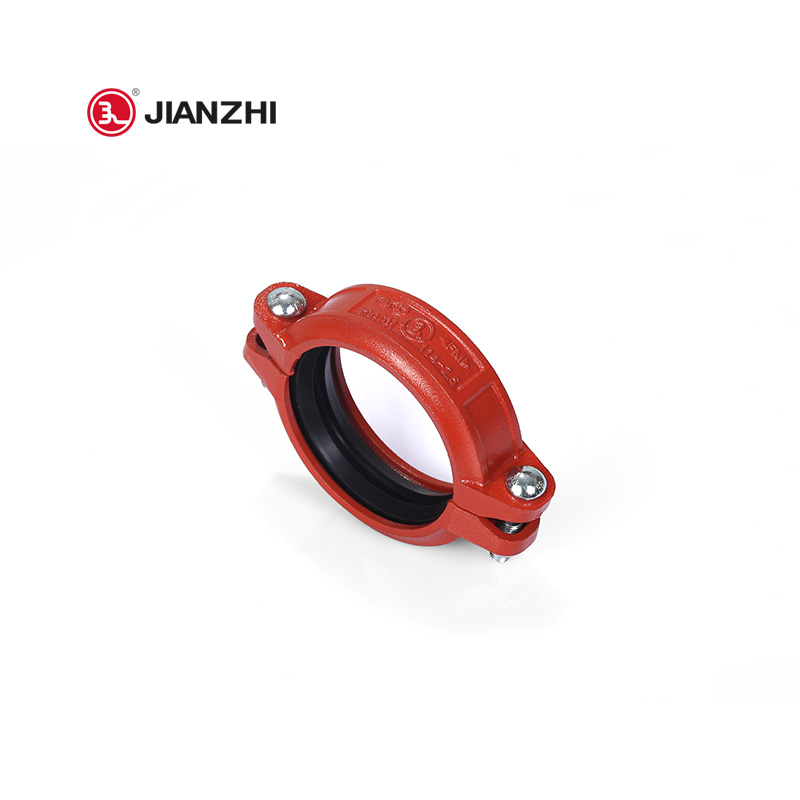
Mechanical couplings (see Figure 3) can withstand forces in all directions and can also withstand any required pressure. Today, we see a trend toward shop-welded assemblies connected in the field by mechanical couplings or systems with fully mechanical couplings with major dimensions of 2 inches or more. Both rigid and flexible couplings are available. Some projects also include vertical risers that benefit from the linear flexibility of "flexible" couplings to avoid expansion joints or increased shaft size offset to prevent pipe breakage due to shear forces at the inflexible shaft wall. Depending on the geometry and vibration isolation of the pump or equipment, flexible mechanical couplings can also be used as an alternative to flexible connections.


Corrosion


It is important to address corrosion issues in piping systems. Typically, circulating heating or cooling systems use corrosion inhibitors and possibly biocides. Nitrite and molybdate are the most common corrosion inhibitors. Some design houses specify molybdate only for chilled water systems, but it allows the use of molybdate or nitrite in hot water systems that raise the water temperature above 140°F in the winter. This is because in cold water, nitrite can be food for microorganisms; microbial "blooms" can occur in chilled water systems.


Add a separate inhibitor to protect the "yellow metal", such as copper. In glycol systems, most suppliers use phosphate corrosion inhibitors because it also meets FDA regulations for food-grade products, so they only have to produce one product for both food-grade and non-food-grade glycols.


However, at least one supplier uses nitrates, so each owner must keep track of what is in their building. No data are available on the effectiveness of semi-nitrate and semi-phosphate treatments; mixing glycol with different chemical inhibitors is not recommended. Systems containing glycol must maintain a glycol concentration between 18% and 25%. Sources vary, but no manufacturer sells premixed glycols at concentrations below 20%; it is recommended not to go below 25%.


If this is not done, microorganisms may multiply rapidly because glycol is food. Glycol is an alcohol, just like wine making, and it is not until the concentration becomes toxic that microorganisms will multiply. Never connect domestic make-up water to a glycol system, otherwise the concentration will slowly drop until a major problem occurs. It is recommended to use a feed tank with premixed industrial (non-automotive) glycol, pressure switch and pump.


Steel is relatively uncorrosive if it is in a high pH environment (e.g., reinforcing steel in concrete). pH scale is logarithmic, usually between 0 and 14. It indicates the acidity or alkalinity of the solution, with 0 indicating the most acidic and 14 the most alkaline. pH of 7 indicates neutrality. pH range of 8 to 10.5 is typically used for piping systems containing steel. However, steel will corrode if the pH is low or if individual chemicals attack the steel. Many corrosion protection schemes rely on high pH values, but this is a problem for systems that include boilers with aluminum heat exchangers because aluminum is not compatible with high pH values. The combination of steel tubes and aluminum heat exchangers requires a very narrow pH range in circulating systems, typically 8 to 8.5.


Surface condensation is another problem. In the Midwest, PEX or other plastic piping materials are not typically insulated in some systems because condensation does not form. However, from an energy standpoint, PEX dissipates heat faster than copper pipe. This is because the larger outside diameter of PEX provides a larger surface area for heat transfer.


Dielectric fittings are controversial today. Dielectric flanges are usually the preferred dielectric fitting because if a dielectric flange is specified and the contractor installs a non-dielectric flange, the only correction is to install a plastic bolt isolation insert - no flange replacement is required. Today, however, NFPA 70: National Electrical Code (NEC) requires bonding of metallic domestic water piping, which destroys the dielectric isolation provided by dielectric flanges, fittings and possibly joints.


Carefully consider the materials you specify for your piping system. 
2022年6月6日星期一

Common Myths About Water Pipe Fittings


Plumbing is an important aspect of any construction works. Therefore, you need to pick the best water pipes and fittings to avoid disappointments and ensure longevity of the plumbing configuration. Choose from various pipe materials and fittings to suit your needs and environment.

When you are thinking about installing a piping system, choosing fittings is also an important part, but most people know very little about fittings. Don’t worry, this article will educate you on plumbing fittings types to make the right choice when making water connection in your premises.

What are Pipe Fittings?

Pipe Fittings are threaded fittings available in various shapes to make diverse plumbing configurations. They include elbows, couplings, tees, and reducers. Pipe fittings are used to join a water pipe to plumbing configurations. Pipe fittings come in many varieties to suit different purposes including joining multiple pipes and regulate water flow in the pipes. They are available as plastic water pipe fittings and metal water pipe fittings.


What are the different types of water supply pipe fittings?

Plumbing involves pipes and fittings. Pipes take care of bringing or taking water while fittings control and manipulate the flow. It is easy to identify a pipe as it is just straight in different sizes. But a water pipe connector is not as easy to identify especially for an average homeowner as there is a variety of them. Here are some plumbing fittings types to help you better identify them and know their work.

Elbows

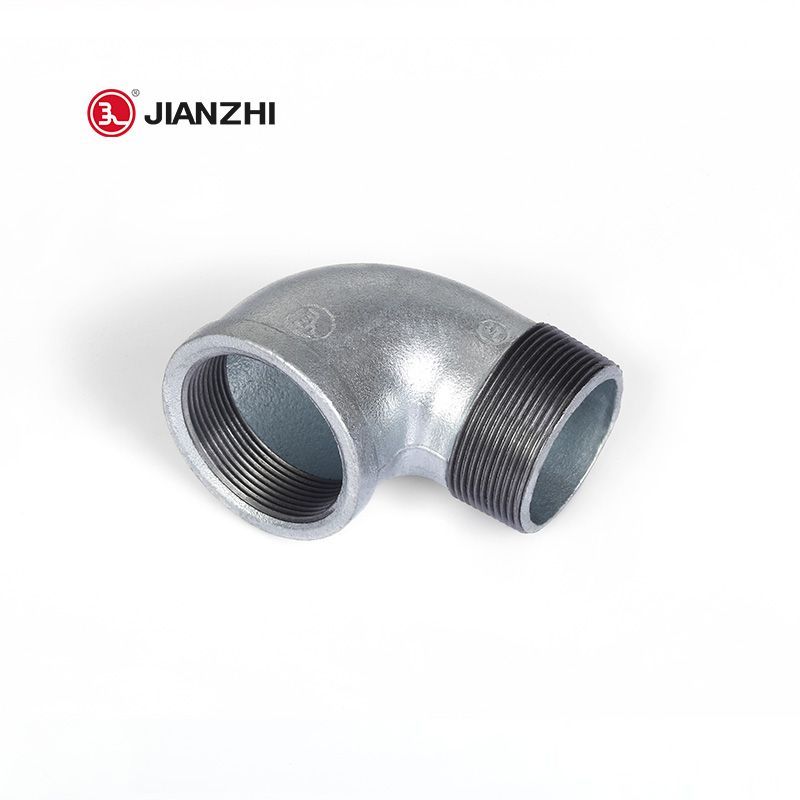
Elbows are used to change flow direction. They come in 45 and 90 degree angles, sweated or threaded, and are important in all plumbing works. Steel elbows have male and female threads to ease connection of different fittings and pipes. Some are unique in that they have a side outlet that allows them to function like a tee.

Tees

Tees come in handy when several branches are required in a water supply. A tee is basically a long coupling with a side outlet; the outlet sits at 90 degrees from the inlet. Sizing of tees is done considering their run and side outlet.

Couplings

Couplings extend pipe runs or alter pipe sizes as in a reducing coupling that is also known as ‘bell’ reducer because of its shape. Couplings are available with female threads or unthreaded. Unthreaded couplings are most suited for solvent welding (plastic gluing) or copper soldering.

Unions
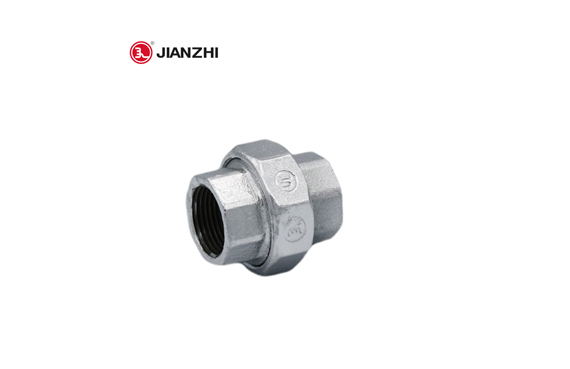
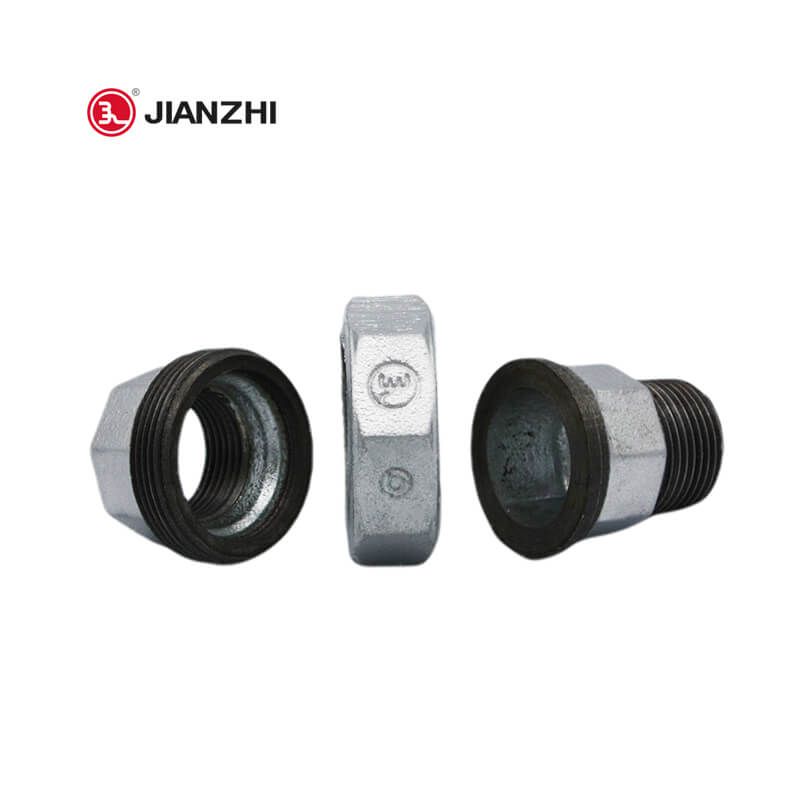
Galvanised Pipe and Fittings Union Nut These are alternatives to couplings when couplings are inconvenient or impractical. Unsoldered couplings require pipe threading, but unions have nuts that are used to create a seal on the pipe ends. This makes unions an excellent choice when connecting two fixed pipes that cannot be threaded into normal coupling, to make repairs much easier in the future.

Dielectric unions are useful when joining pipes made from different metals where they provide a barrier to prevent galvanic corrosion. However, unions have a disadvantage in that you cannot be used them with LP or natural gas.

Caps and Plugs

Just as their name suggests, caps are used to cap pipe ends. Plugs also function the same way but fit into the fitting instead; they are threaded to permit the future use of pipes. Depending on the pipe material, caps can be glued, threaded, or soldered.

Adapters

Adapters’ main function is to extend runs or change the type of connection at the pipe end. This allows connection of different pipes without using a complicated setup. Adapters come in all materials, that is, copper, ABS, CPVC, brass, PVC, malleable, and stainless steel.

Water Supply Pipe Fittings Buying Guide

Pipe fittings are available in different shapes made from different materials. Some pipe fitting materials are more suited for specific environment and functions. Here is information on how to buy the right pipe fitting.

How do you know which pipe fitting you need?

Plumbing fitting pipes depend on the type of pipe you already have in your plumbing works. For example, if you have copper tubing in your house such as Lesso water pipes, then you will require copper fittings, likewise, CPVC pipes need PVC fittings, and tubing can work with a variety of PEX fittings or another material that is compatible with PEX. Plumbing fittings types also depend on their compatibility with fluids running through the application.

How to determine fitting size from pipe dimensions

In the plumbing industry, tubing and pipes sizing is done in two ways:

1.Through the ID (inner diameter). The ID size is known as Copper Tube Size (CTS), which is based on a pipe’s normal size.

2.Through the OD (outer diameter), usually used for smaller diameters that measure ½, 3/8, or ¼.

Nominal Pipe Size

This is the measurement that considers inner diameter instead of actual diameter. When planning plumbing works for a building, you need to establish the flow rate needed in the tube or pipe’s inner diameter. Fittings on the pipes usually are larger than what is indicated on the label as they connect on the outer side of the plumbing pipe.

The size of outer diameter tubing is normally marked on the tube side. If sizing of the tubing is by OD, you need to find fittings with the correct size. For example, a half-inch OD push to connect fitting suits a half-inch OD tube. However, if you buy a half-inch fitting that is made for CTS by mistake, it will not fit. CTS pipes perfectly fit into a half-inch CTS fitting.

When to use OD vs. ID Fittings

CTS is available from large fittings to ¼ inch, although it is not frequently used. The most popular CTS fittings are ½ and ¾ inch or larger as they are useful in household plumbing more than ID nominal sizes. Smaller sizes such as counter filters used in ice makers or refrigerator use OD sized parts.

Can pipe fittings be reused?

Yes, pipe fittings can be reused. All you have to do is to unscrew and re-screw them into another plumbing configuration, provided you use the correct sealant.

In conclusion, you now have adequate information on water pipe fittings to help you identify one and know its use.


What is flexible coupling?

 A flexible coupling is a mechanical device whose main function is to connect two shafts and transmit power. Compared with traditional rigi...